
Moody's spares France a downgrade, but keeps the warning in place
3 min read
Finance / 3 MIN READ
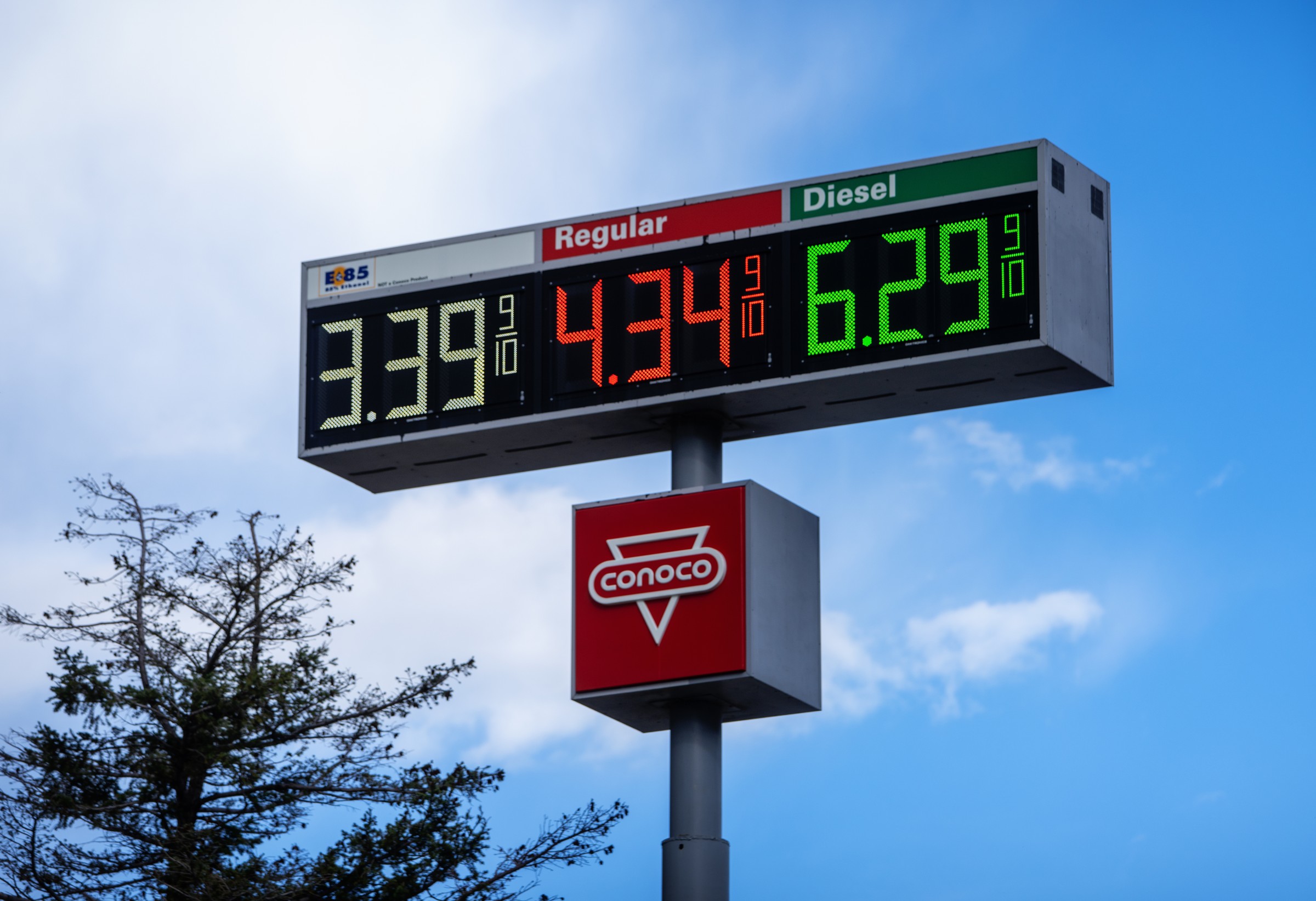
Gasoline and diesel come out of the same barrel of crude oil, yet over the past week they headed in opposite directions even as crude climbed. Brent, the main international crude benchmark, settled at $109.55 a barrel on Monday, October 19, and rose as high as $111.05 in trading early Tuesday, October 20, its highest since May, Reuters reported.
At American pumps, AAA's national average for regular gasoline fell about 6 cents to $4.28 a gallon on Tuesday, about 41% above a year ago, while diesel rose about 4 cents to $6.32, about 75% above. Diesel is still about 21 cents below its September 22 record of $6.53, but its premium over gasoline has grown to about $2.04 a gallon, from about 58 cents a year ago.
The split comes from a shortage of refining as well as oil. Refineries heat crude and separate it into fuels, and each barrel yields a mix of gasoline, diesel and other products that a refinery can shift only a little. The Federal Reserve Bank of Dallas estimated on October 8 that the world has lost as much as 10% of refining capacity since late spring, through damaged Middle East refineries, Ukrainian drone strikes on Russian plants and export limits in China and Russia.
Refineries cannot be rebuilt quickly, so buyers bid against each other for the diesel that exists. The International Energy Agency (IEA) says wholesale diesel, sold in bulk before reaching stations, costs nearly double the price of crude, and the Dallas Fed attributes the gap to supply constraints "rather than retailer or distributor markup." Gasoline is following its usual seasonal decline, AAA notes, while diesel demand holds up because trucks, farms and factories keep running and the heating season is beginning.
Expensive diesel reaches people who never fill a diesel tank, because it moves trucks, trains, ships and tractors. The Food Industry Association has said a diesel spike takes 30 to 45 days to reach grocery stores, CNN reported, and Jason Miller of Michigan State University told CNN the cost "hits the consumer mostly indirectly and with a lag." Transport typically makes up under 5% of the selling price of commonly bought goods, Miller said, so a 75% rise in diesel means nothing close to a 75% rise in groceries. Homes heated with heating oil, a close relative of diesel, feel it directly, and the US Energy Information Administration (EIA) forecast on October 6 that heating oil prices will run more than 30% above last winter.
Relief is expected to come slowly. The IEA said on October 14 that diesel stockpiles are unlikely to be rebuilt before the second half of 2027. The EIA forecasts US retail diesel averaging about $4.50 a gallon in 2027, though it completed that forecast on October 1, before oil's latest climb, and assumes Middle East oil exports keep recovering. If those forecasts hold, this fall's diesel prices will keep turning up in delivery charges, shelf prices and heating bills long after drivers notice cheaper gasoline.
More on these ideas