Apple's first foldable iPhone goes on sale from $1,999
3 min read
Research breakdown / Technology / 2 MIN READ
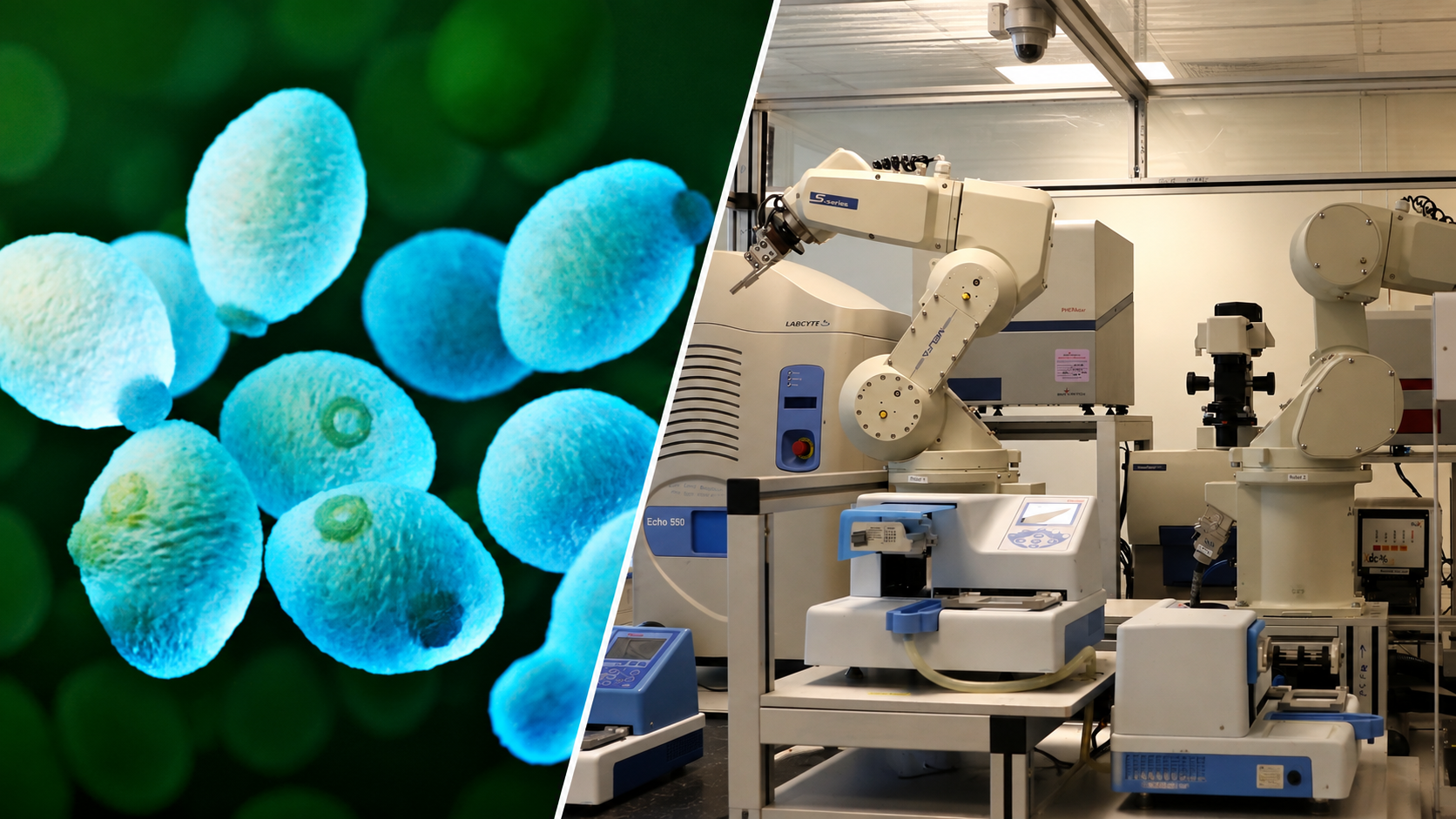
Yeast biology is a maze of genes, metabolites and stress responses far too large for any one scientist to explore systematically. Researchers at Chalmers University of Technology have built an "AI scientist" that works through part of that maze largely on its own, proposing hypotheses about brewer's yeast, testing them with lab robots and learning from the results with minimal human intervention in the routine cycle. The study, led by Brunnsåker and colleagues, was published in the Journal of the Royal Society Interface, and Chalmers publicized it on September 30, 2026.
The system is able to run this loop because it links reasoning software directly to automated lab equipment. AI agents built on large language models work alongside symbolic relational learning, a method that finds logical rules in structured data, and ontologies, which are controlled vocabularies that keep facts consistent. Together they generate hypotheses and design experiments. Robots then grow the yeast and handle the liquids, and a mass spectrometer measures the cells' metabolites, the small molecules produced by their chemistry. The results go into a graph database, and the system uses them to refine its understanding before choosing what to test next.
That cycle produced findings the authors report as discoveries. In yeast treated with spermine, a compound involved in cell growth, the system linked slowed growth to glutamate. It also found that aminoadipate partly protected yeast from stress caused by formic acid. Not every idea held up. Some predictions were confirmed, others were falsified or only partly matched, and the framework records those negative results as well, so failed ideas still inform later choices.
Humans remain part of the process. The paper notes that the workflow is not fully automated, since some plate transfers and safety reviews are still done by hand. Senior author Ross D. King, who built the earlier robot scientists Adam and Eve, presents the work as a way to speed up biology while humans continue to set priorities, interpret findings in a broader context and handle ethics. Co-author Ievgeniia A. Tiukova told Chalmers that such a system "actively generates new scientific knowledge" instead of only supporting human decisions.
What the study documents is a working step toward self-driving labs in yeast systems biology, one that can repeatedly propose, test and revise ideas with little hands-on help. If such systems mature, scientists could spend less time on routine experiments and more on deciding which questions are worth asking.
More on these ideas