
Apple's first foldable iPhone goes on sale from $1,999
3 min read
Technology / 3 MIN READ
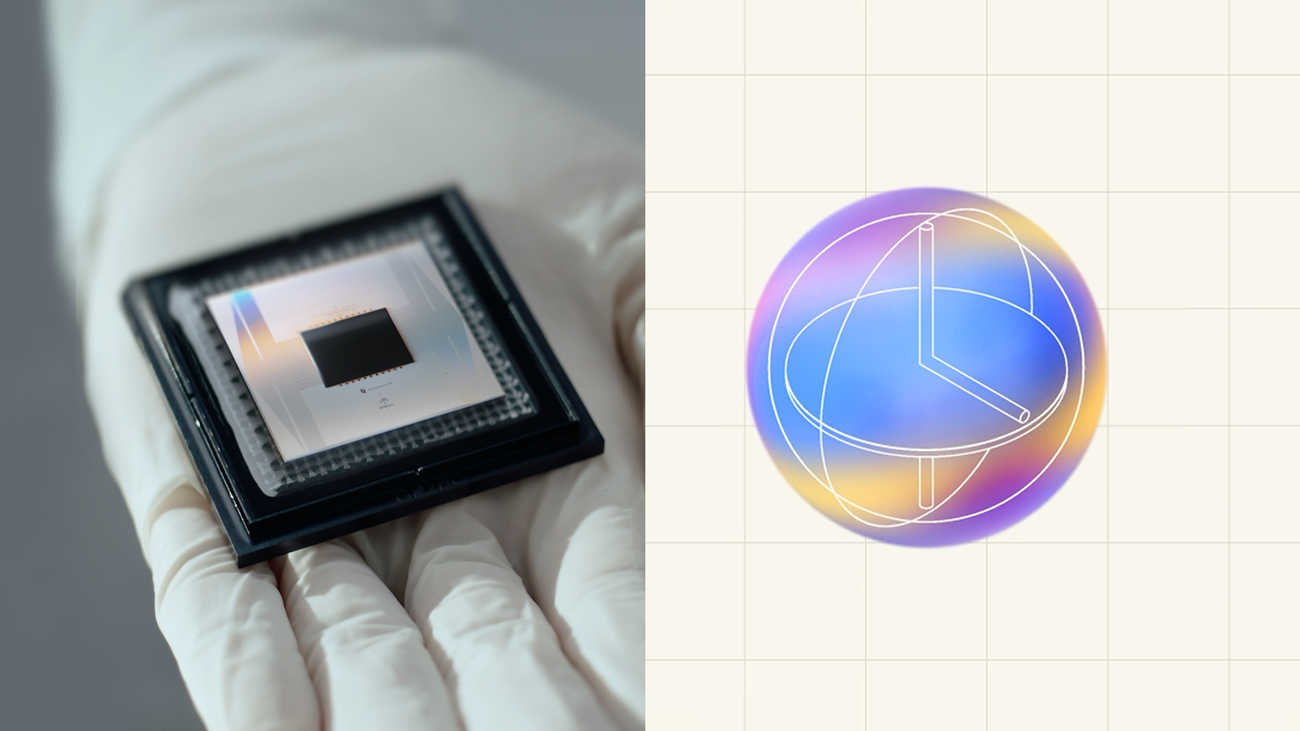
Quantum computers need a scarce ingredient called magic states to run their most powerful operations, and making those states clean enough has been one of the field's most expensive problems. A Google Quantum AI team led by Emma Rosenfeld has now shown that a potentially cheaper way of making them works on real hardware. In a study published in Science on October 15, the team used a technique called magic state cultivation on Google's Willow chip and, in a small test, cut the error in the prepared state about 40-fold.
Magic states matter because of how future quantum computers are expected to handle errors. Qubits, the basic units of a quantum computer, make frequent mistakes, so information will be spread across many qubits and checked constantly. Everyday operations are easy to protect this way, but the operation that gives a quantum computer its extra power cannot be applied directly. The machine instead prepares a magic state separately and feeds it in, using it up, so any flaw in the state becomes a flaw in the calculation. Google says some estimates put the cost of making these states at up to 95% of a future machine's capacity.
The usual method, distillation, combines many imperfect magic states into fewer, better ones, which eats qubits and time. Cultivation, which Google researchers proposed in 2024, works on a single state instead. A rough magic state is loaded into a small group of qubits, and the chip repeatedly checks whether it is still the right state. Helper qubits act as alarms, and if any alarm trips, the attempt is thrown away and restarted. A state that passes every check comes out cleaner than the chip's own operations and can then move into a larger error-correcting code.
To measure the gain, the researchers ran the same test circuit with and without cultivation. Without it, the prepared state was wrong about 4.4 times in 1,000 runs. With it, the error fell to between 1 and 2 in 10,000, roughly a 40-fold improvement by the researchers' count. The cultivated state reached a fidelity, a measure of how close a state is to a perfect magic state, of at least 99.99%. That cleanliness came at a cost: 92% of attempts were discarded after a check flagged an error. Google calls the work the first demonstration of a practical solution to the bottleneck, and the paper notes trapped-ion experiments have reached similar fidelity.
The test used at most 54 of Willow's 105 qubits, and its error rate is still far higher than useful computing needs. Some chemistry simulations would need magic states with errors around 1 in a million or lower, at least 100 times cleaner than this result, and breaking widely used encryption would need about 1 in 10 billion. The team has not yet used a cultivated state inside a calculation. Cultivation's projected savings come from Google's 2024 simulations, but the experiment shows its checks work on real hardware, giving Google a tested starting point for larger chips.
More on these ideas