
Apple's first foldable iPhone goes on sale from $1,999
3 min read
Technology / 3 MIN READ
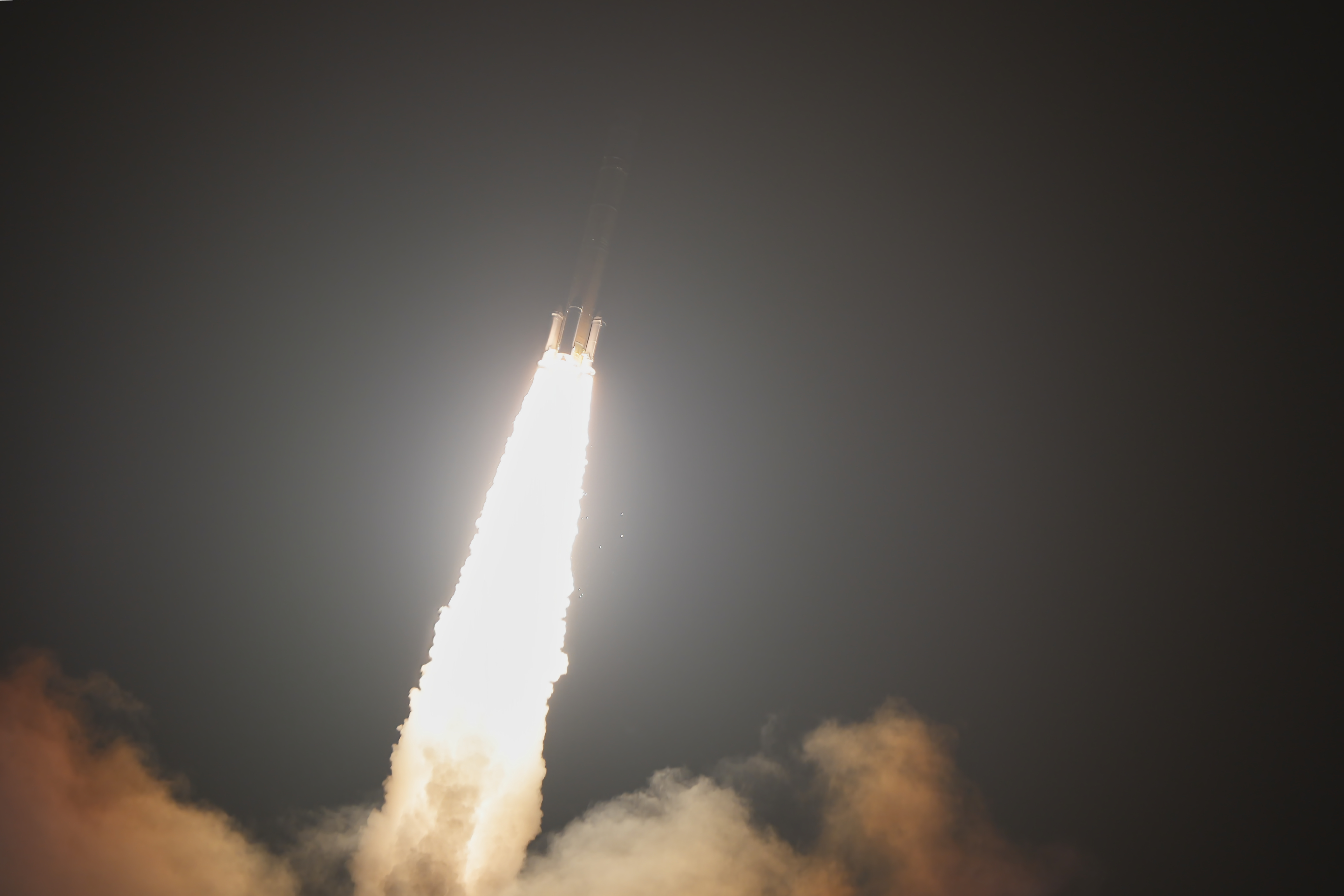
Mars has two small moons, and nobody knows for sure where they came from. Japan's space agency, JAXA, has now launched a spacecraft to bring a piece of the larger one, Phobos, back to Earth. The Martian Moons eXploration spacecraft, known as MMX, lifted off on an H3 rocket from the Tanegashima Space Center at 4:41 a.m. Japan Standard Time on October 20, which was 19:41 GMT on October 19.
JAXA says the rocket flew as planned and released MMX into its planned orbit about 71 minutes after liftoff. JAXA's project manager, Yasuhiro Kawakatsu, said the spacecraft had made contact, deployed its solar panels and was in a "very stable condition," Ars Technica reported. The mission is led by Japan, with NASA, the European Space Agency, France's space agency CNES and Germany's DLR as partners.
Everything after separation is still a plan, starting with a cruise of about 10 months due to bring MMX to Mars in August 2027. Phobos is only about 27 kilometers across at its widest, according to Reuters, and DLR puts its gravity at less than one-thousandth of Earth's, too weak for a spacecraft to circle it the way it would circle a planet. MMX is instead due to stay close to Phobos by flying a path around Mars that keeps it looping around the moon. From there it plans to study the surface, drop a small German and French rover called Idefix onto it, and then make up to two landings to collect at least 10 grams of material, using JAXA's corer on a robotic arm and a NASA device that blows surface grains into a canister with bursts of nitrogen gas. A capsule carrying the sample is due to land in Australia in 2031, about five years after launch.
The sample is meant to settle where Mars's moons came from. Phobos and its smaller sibling, Deimos, may be asteroids captured by Mars's gravity, or they may be debris thrown into orbit by a giant impact on Mars. Patrick Michel, who co-leads the rover project, said in Ars Technica's report that data gathered from far away "cannot really tell us exactly what are the properties, as we can do with a sample return in the lab." That is why even 10 grams matters: Earth labs hold instruments that ESA's project scientist says are "too large, complex or sensitive to send to space." Comparing the returned grains with Martian rock and asteroid material could help tell the two ideas apart.
If MMX succeeds, it would return the first sample ever brought back from Mars or one of its moons. Earlier attempts to reach Phobos did not get that far: two Soviet probes launched in 1988, 38 years ago, were lost before finishing their missions, and Russia's Phobos-Grunt sample-return mission failed soon after its 2011 launch and never left Earth orbit. Finding out whether Mars's moons were captured or born from an impact depends on every later step working, from the Phobos landings to the capsule's return.
More on these ideas