
Apple's first foldable iPhone goes on sale from $1,999
3 min read
Technology / 3 MIN READ
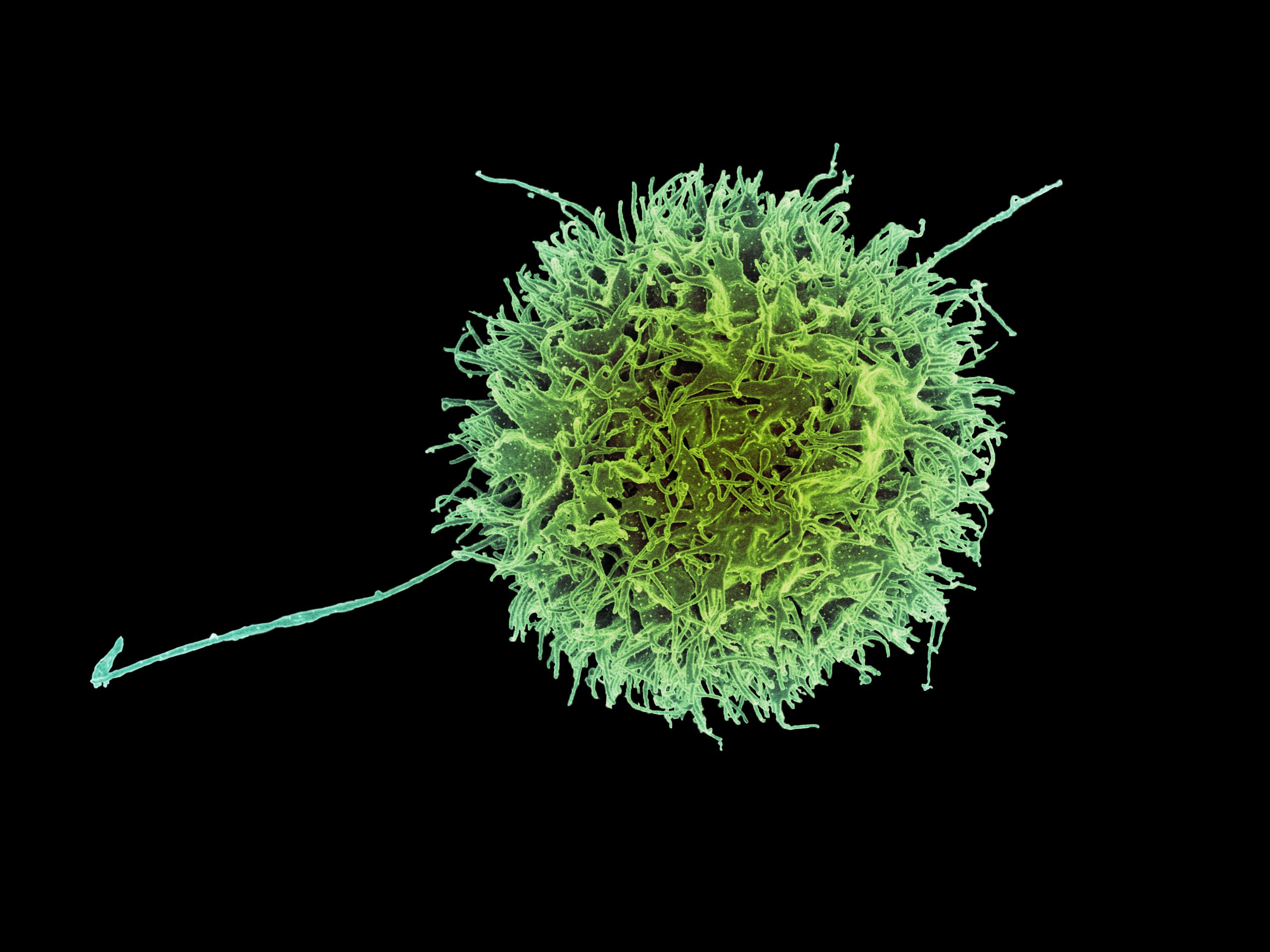
A single kind of injection reprogrammed a mouse's own immune cells, right inside its body, so they would hunt down specific targets. A team at MIT led by chemical engineer Daniel G. Anderson reported the work on October 13, 2026, in Nature Biotechnology.
The approach matters because of how this kind of therapy is made today. CAR T therapy, the best-known version, starts by drawing a patient's blood and sending a type of immune cell called a T cell to a lab. There the cells receive a CAR, a lab-designed receptor that tells each cell exactly what to look for, such as cancerous cells. The cells are grown, shipped back and infused. That custom manufacturing makes the therapies slow and expensive.
CAR T also struggles when the disease is driven by T cells, as in T-cell cancers and some autoimmune diseases, because CAR T cells aimed at T cells can attack one another, a problem called fratricide. The MIT team therefore used natural killer, or NK, cells, immune cells built to destroy infected or abnormal cells that do not share this self-attack problem.
To give NK cells their CAR without a lab, the researchers packed mRNA into lipid nanoparticles, tiny fatty bubbles of the same basic kind used in mRNA COVID vaccines. The mRNA acts as a temporary instruction sheet, telling a cell to build the CAR for a while before it breaks down. The bubbles were coated with antibody fragments that latch onto NK cells, which steered them to the right target.
In mice, up to about 80% of the targeted NK cells picked up the instructions, with what the authors describe as minimal off-target effects. Aimed at B cells, another type of immune cell, the new CAR NK cells completely cleared them from the blood of healthy mice. In a mouse model of autoimmune hepatitis, where rogue T cells attack the liver, a single injection destroyed nearly all of the misbehaving T cells, and the liver damage healed.
The cancer tests produced encouraging results in small groups. In an aggressive melanoma model, three of five treated mice went into complete remission. The team also adapted the method for human NK cells and tested it in humanized mice carrying human blood cancers. Tumors shrank in two of those models, and in a T-cell lymphoma model five injections cleared the tumors, comparable to CAR NK cells made the conventional way in a lab.
"If a patient can just get an infusion of nanoparticles, it would dramatically simplify the process and reduce costs," Anderson said in MIT's announcement, although the method has not yet been tried in people and those cost savings remain untested. Because mRNA instructions fade, it is also unclear how long the effect lasts, and the lymphoma mice needed five doses. The approach will need to prove itself in larger animals and then in human trials, and no CAR NK therapy of any kind has FDA approval yet.
More on these ideas