
Apple's first foldable iPhone goes on sale from $1,999
3 min read
Technology / 2 MIN READ
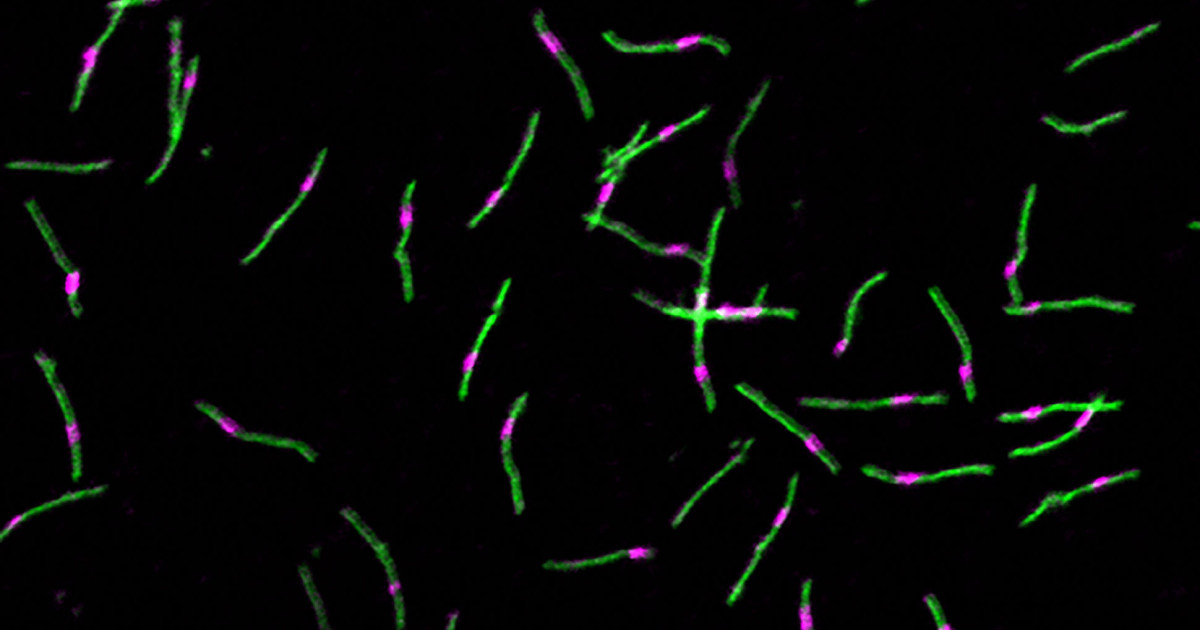
A few carefully placed stripes made a striking difference to nerve cells growing in laboratory dishes. Northwestern University researchers found that soft molecular threads with a short positively charged section between longer negative sections encouraged the cells to grow more elaborate branches and form more connections.
The work, published in Science on October 1, 2026, began with a way to control how these threads assemble. They are polymers, built from repeating molecular pieces, but their building blocks hold together through reversible attractions. This lets the researchers grow long, soft structures and control where different charged sections begin and end.
As building blocks attach, each thread extends. When the supply runs low, its ends fold shut, stopping growth and helping prevent the structures from joining into a tangle. Introducing a different building block starts a new segment, allowing the researchers to arrange positive and negative regions along the thread.
The paper reports that those opposite-charge regions stayed distinct in water. Lead researcher Samuel I. Stupp says threads left in a test tube for months also kept their length and pattern. That stability allowed the team to investigate how the arrangement affected cells.
In neuron cultures, making the whole thread positive killed cells, while entirely negative threads did little. Randomly mixed charges were unremarkable too. The more effective design used a small positive region that anchored to the cells’ negatively charged outer membranes, with longer negative regions on either side.
Neurons exposed to that design grew longer, more branched extensions. Northwestern reports that they were more active by day seven and had formed more synapses, the connections between nerve cells, by day fourteen than untreated cultures.
The threads had not been equipped with the usual biological growth signals that bind to receptors on cells. Stupp’s group proposes that their physical behavior helps explain the response: the positive section stays attached while the negative sections move nearby and may gather helpful proteins already present in the surrounding liquid. That explanation remains a hypothesis.
The findings concern cells in culture, with no demonstration of repairing an injured nervous system in an animal or person. What the researchers can now investigate is how changing a material’s charge pattern changes nerve-cell growth and connections, giving them a way to study those responses without building conventional growth signals into the material.
More on these ideas