
Apple's first foldable iPhone goes on sale from $1,999
3 min read
Research breakdown / Technology / 2 MIN READ
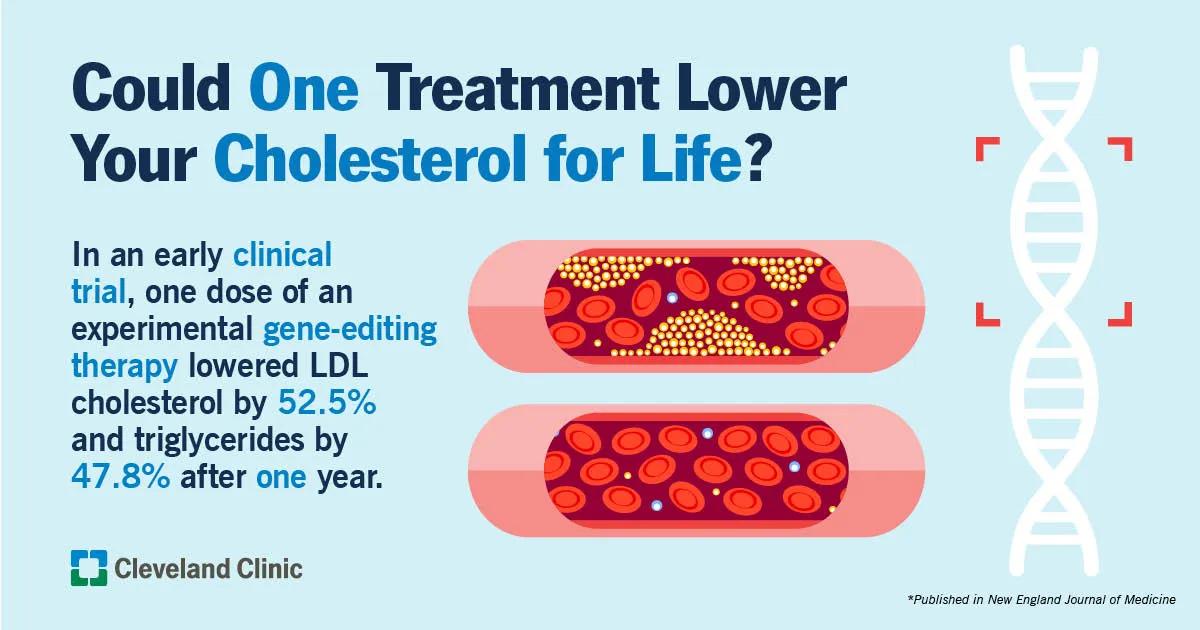
For some people, cholesterol stays stubbornly high even on the best available medication. That leaves them with persistently high LDL, often called "bad" cholesterol because it can build fatty deposits in arteries and raise the risk of a heart attack or stroke. A small early trial now suggests that a single gene-editing infusion could keep those levels lower for at least a year.
The treatment, called CTX310, uses CRISPR, a technology that makes targeted changes to DNA. Tiny fat particles carry the editing tools into liver cells, where they disable a gene called ANGPTL3. That gene makes a protein that helps keep certain blood fats high, so switching it off can lower both LDL cholesterol and triglycerides, another type of blood fat. Because the edit is made in the DNA itself, the hope is that one dose keeps working long after the infusion.
To test that idea in people, researchers gave different doses of CTX310 to 15 adults whose blood fats remained high despite standard treatment. The trial was funded by CRISPR Therapeutics, the company developing CTX310, and was designed mainly to check safety. Researchers also tracked blood fat levels to see whether any drop would last a full year.
The one-year results, published in the New England Journal of Medicine, were strongest among the four people who received the highest dose. A year after their infusion, their LDL cholesterol was on average 52.5% lower than before treatment, meaning it had fallen to roughly half its starting level. Their triglycerides were down by an average of 47.8%. Those figures describe only that four-person group, so they are an early sign that one treatment can produce a lasting effect and cannot yet show how well it works in general.
The safety picture was encouraging for the same small group of participants. Researchers reported no serious side effects attributed to CTX310 during the year, although some participants had reactions during their infusions that later resolved. A study of 15 people cannot reveal every possible risk, though, or predict how the treatment will behave in a much larger population.
Lower blood fats also matter only if they lead to fewer heart attacks and strokes, and that question will need larger studies. Participants are scheduled for 15 years of safety monitoring, and CRISPR Therapeutics is testing the treatment further in a follow-up trial that includes people with severely elevated triglycerides. Those studies will show whether a single infusion can become a dependable option for people whose blood fats stay hard to manage.
More on these ideas