
Apple's first foldable iPhone goes on sale from $1,999
3 min read
Technology / 3 MIN READ
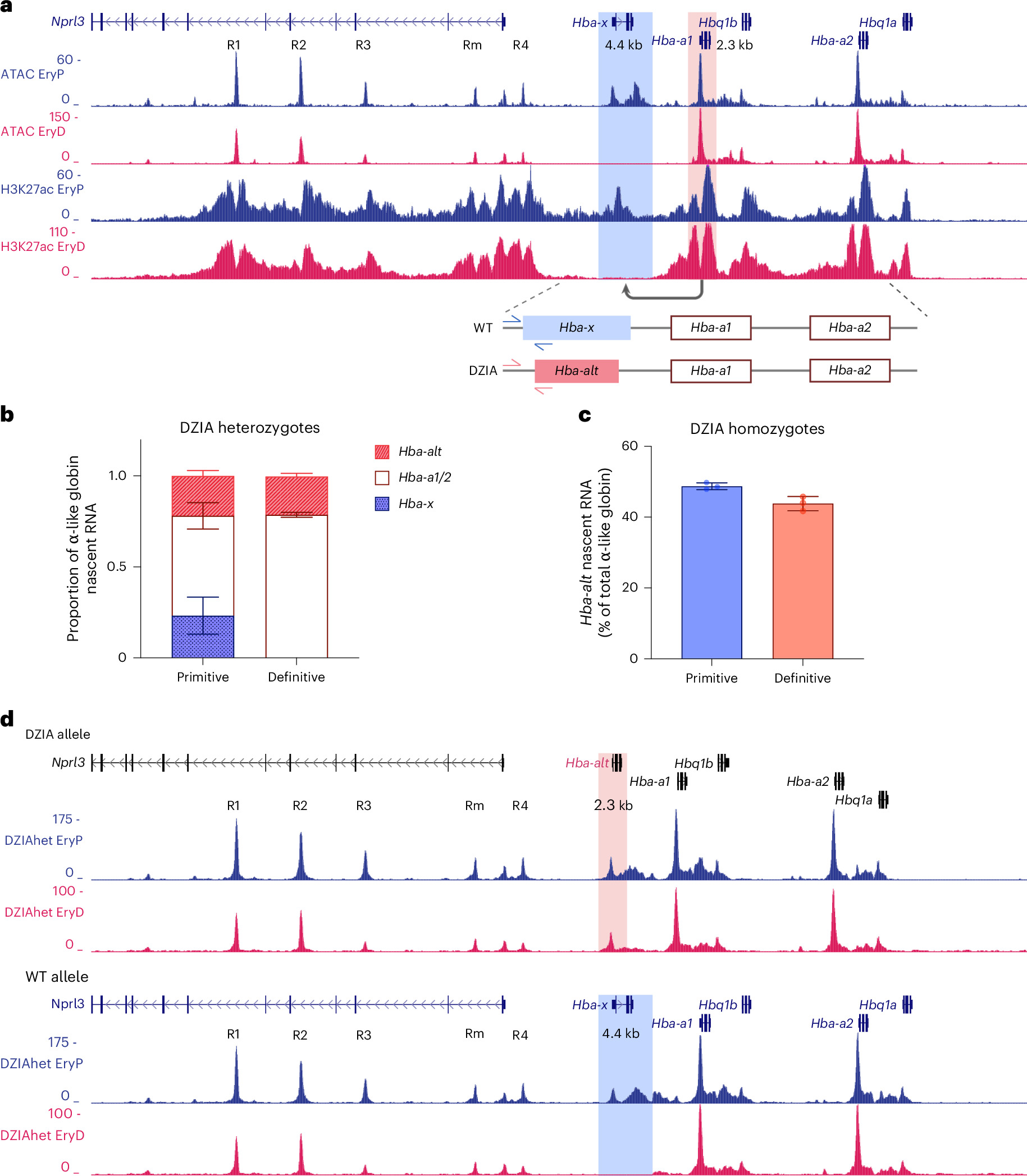
Every person carries a blood gene that switches off early in development. Oxford researchers have found a way to switch it back on, and in mouse embryos and human cells with severe alpha-thalassemia it partly made up for the protein the disease takes away. Their study was published in Nature Genetics on October 1.
Hemoglobin, the protein in red blood cells that carries oxygen, is normally built from alpha-globin and beta-globin chains. In severe alpha-thalassemia, cells cannot make enough alpha-globin, so that pairing breaks down, and people with severe disease may need lifelong transfusions or a stem-cell transplant. The team at Oxford's MRC Weatherall Institute of Molecular Medicine focused on zeta-globin, an alpha-like chain the body uses only briefly during embryonic development, to see whether it could take over some of alpha-globin's job.
To restart zeta-globin, the researchers looked at its promoter, the stretch of DNA that controls whether the gene is active. They found two short sequences there that serve as landing spots for two proteins that keep the gene silent. Disrupting both landing spots let zeta-globin production resume. In cultured human blood stem and progenitor cells, they made those changes with base editors, tools that rewrite individual DNA letters.
The team then tested the promoter edits in mouse embryos modeling Hb Bart's hydrops fetalis syndrome, the most severe form of the disease, in which no alpha-globin is made. At embryonic day 17.5, unedited disease-model embryos were swollen and anemic, while edited ones looked much less so. The edited embryos produced a substitute hemoglobin called Hb Portland 2, made from zeta and beta chains, and their zeta-globin messenger RNA, a measure of how active the gene is, reached about 7.5% of the level of the beta-like chains it must pair with, a small but measurable fraction. That comparison included only two edited embryos, and the rescue was shown only up to that embryonic stage, with no demonstrated survival to birth. Separately, mice carrying the edits without the disease were healthy, with normal blood counts.
The human-cell results pointed in the same direction. In these measurements, 100% would mean a full partner for every beta-like chain. In cells from people with hemoglobin H disease, a milder form, alpha-like globin rose from 24.8% to 48.4% of the beta-like level. In cells derived from fetal stem cells affected by Hb Bart's syndrome, zeta-globin rose from 17.1% to 50.5%, so the edits roughly doubled or tripled the supply of partner chains. Editing worked in 25% to 90% of cells, depending on the sample, so both figures estimate the effect in cells that were actually edited.
The authors see those levels as potentially useful for patients, but no one has received the treatment. Researchers still need to check for unintended edits, test whether edited human stem cells can settle in after a transplant and see whether the effect lasts. Those answers will decide whether a gene retired before birth can be put back to work for people with severe alpha-thalassemia.
More on these ideas