
Apple's first foldable iPhone goes on sale from $1,999
3 min read
News / Technology / 2 MIN READ
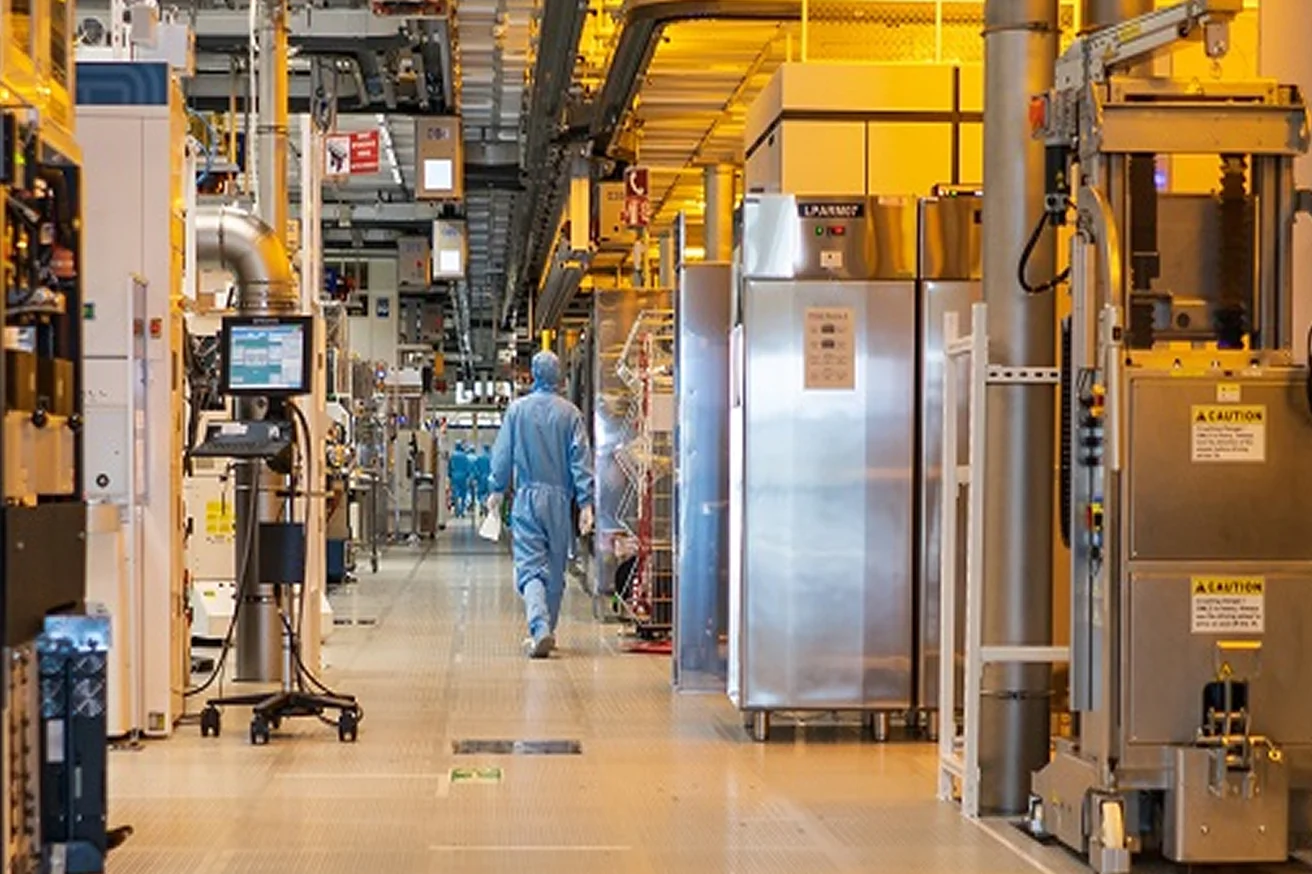
Quantum computers have a manufacturing problem as well as a physics problem. Their basic units, called qubits, must be controlled and read out reliably, but impressive laboratory demonstrations are only part of building machines that can be made repeatedly. In September, French company Quobly said it had performed three essential qubit operations on a single silicon chip produced on an industrial semiconductor line.
The chip came from STMicroelectronics' 300-millimeter production line in Crolles, France. Quobly and ST reported that it could read a qubit's state, change one qubit using a single-qubit gate, and perform a two-qubit gate that links the behavior of two qubits. Taken together, those are basic moves needed to operate a quantum processor. Their appearance on one chip from a commercial wafer line is the point of the announcement.
Quobly's approach places spin qubits in tiny regions of silicon called quantum dots. Instead of treating each device as a custom laboratory object, the companies designed it for a semiconductor process already used to make chips. That connection matters because a factory process could, in principle, make it easier to reproduce devices and bring quantum hardware together with the electronics that control it. Quobly also describes joint work on design tools for electronics that must operate alongside the quantum devices at extremely low temperatures.
The result does not yet tell us how well a large processor would work. Quobly has not supplied detailed figures for error rates, manufacturing yields, how long the qubits retain their state, or the number of qubits on the demonstration chip. It says those measurements will appear in a forthcoming paper. Without them, the reported operations cannot be used to compare this chip's performance with competing quantum designs.
That leaves a concrete next test: can the companies make chips with the same operations consistently across wafers, while maintaining the performance a useful computer would require? Quobly's claim so far is that key quantum operations have made the move onto an industrial silicon production line. Repeating that result at scale is what would turn a promising manufacturing route into dependable hardware.
More on these ideas